
WooCommerce Shipping Is Powerful — and That's the Problem
WooCommerce powers roughly 36% of all online stores. There's a good reason for that: it's free, it runs on WordPress, and you can customize just about everything. But when it comes to shipping, that flexibility is a double-edged sword.
Out of the box, WooCommerce gives you three shipping options: flat rate, free shipping, and local pickup. That's it. No real-time carrier rates, no automatic label printing, no tracking emails. If you're selling anything beyond a single product with a single shipping price, you're going to need plugins.
I've set up WooCommerce shipping for dozens of stores, and the same mistakes keep popping up. Stores leave money on the table with flat rate pricing when they should be using calculated rates. They install five plugins when two would do the job. They skip shipping zones entirely and wonder why customers in Alaska are paying the same $5 rate as someone in the next town.
Let's fix all of that.

The Default Shipping Options (And Why They're Not Enough)
WooCommerce ships with three methods that live under WooCommerce > Settings > Shipping:
Flat Rate charges every customer the same amount — say, $7.99 per order. This works fine if you sell items that are roughly the same size and weight (think: t-shirts or books). It falls apart when your catalog includes both earrings and table lamps.
Free Shipping does exactly what it sounds like. You can set it to trigger on a coupon code or a minimum order amount. The minimum order threshold is actually a solid strategy — more on that in a bit.
Local Pickup lets customers grab their order in person at no charge. Useful if you have a physical location, completely irrelevant if you don't.
For a brand-new store shipping one or two product types, flat rate is perfectly fine. But the moment you start adding products with different sizes, weights, or margins, you need something smarter.
Setting Up Shipping Zones and Classes
Before you touch a single plugin, get your shipping zones right. Zones are how WooCommerce decides which shipping methods apply to which customers based on their address.
A typical setup looks like this:
- Local (your state or metro area) — flat rate $5 or free pickup
- Domestic (rest of the US) — calculated rates or flat rate $8-12
- Canada — flat rate $15 or calculated rates
- International — calculated rates only
Inside WooCommerce, go to Settings > Shipping > Shipping Zones and add each zone with its geographic regions. The order matters: WooCommerce matches customers to the first zone that fits, so put your most specific zones at the top.
Shipping Classes are the other piece most people skip. Classes let you group products by shipping characteristics. I usually create three:
- Standard — normal-sized items
- Oversized — anything that needs a large box or special handling
- Lightweight — items under 8 oz that qualify for USPS First Class
Assign a class to each product, then set different rates per class within each zone. This alone can save you from the "one price fits all" trap.
The Plugins Worth Installing
Here's where WooCommerce gets interesting. The plugin ecosystem is enormous, but you really only need one or two shipping plugins. Here are the ones I've tested and recommend:
WooCommerce Shipping (by WooCommerce/Automattic)
This is the official extension, and it's free. It lets you print USPS and DHL Express labels right from your WooCommerce dashboard. The USPS rates are commercial pricing — usually 30-50% less than retail. For stores shipping under 50 orders a day with USPS, this honestly might be all you need.
Cost: Free Best for: USPS-focused stores under 50 orders/day
ShipStation for WooCommerce
ShipStation connects to your WooCommerce store and pulls in orders automatically. You get discounted rates from USPS, UPS, FedEx, and DHL, plus batch label printing and automation rules. The WooCommerce integration is solid — orders sync every few minutes, and tracking numbers push back to WooCommerce automatically.
Cost: $9.99-$159.99/month depending on volume Best for: Multi-carrier stores shipping 10+ orders/day
Shippo for WooCommerce
Shippo's plugin gives you real-time rates at checkout from 50+ carriers and lets you print labels from WordPress. The pay-per-label plan ($0.05/label) makes it affordable for stores with variable volumes. Their rate comparison feature alone can save $2-4 per package by finding the cheapest option across carriers.
Cost: Free plan + $0.05/label, or $19/month for Pro Best for: Stores wanting rate comparison without a big monthly fee
Easyship
Easyship shines for international shipping. It pre-calculates duties and taxes at checkout so your customers know exactly what they'll pay. For domestic-only stores, it's overkill. For anyone shipping to 5+ countries regularly, it's worth the setup time.
Cost: Free for 50 shipments/month, paid plans from $29/month Best for: Stores with significant international sales
Table Rate Shipping (by WooCommerce)
This is a premium extension ($99/year) that lets you create complex rate rules based on weight, item count, price, and shipping class combinations. If you need rules like "orders with 1-3 items of Class A ship for $8, but 4+ items ship for $12, unless the order is over $100 then it's free" — table rate is what you want.
Cost: $99/year Best for: Stores with complex product catalogs needing granular rate control
Real-Time Rate Calculation
Showing live carrier rates at checkout is the gold standard. Customers see exactly what UPS or USPS charges based on their address and the items in their cart. No more guessing, no more overcharging (or undercharging).
To enable this, you need a plugin that connects to carrier APIs. ShipStation, Shippo, and the official WooCommerce Shipping extension all do this. You'll also need accurate product weights and dimensions entered for every product — this is where most stores fail.
Go through your entire catalog and weigh/measure everything. Seriously. A bathroom scale and a tape measure will take you an hour if you have 50 products. The accuracy of your shipping rates depends entirely on this data.
Connecting to ShipStation or Shippo for Label Printing
If you go with ShipStation or Shippo, the workflow changes. Instead of printing labels inside WooCommerce, you'll process shipments in the external platform:
- Orders flow from WooCommerce into ShipStation/Shippo automatically
- You pick the cheapest carrier rate for each order (or set rules to auto-select)
- Print labels in batches
- Tracking numbers sync back to WooCommerce
- Customers get tracking notification emails
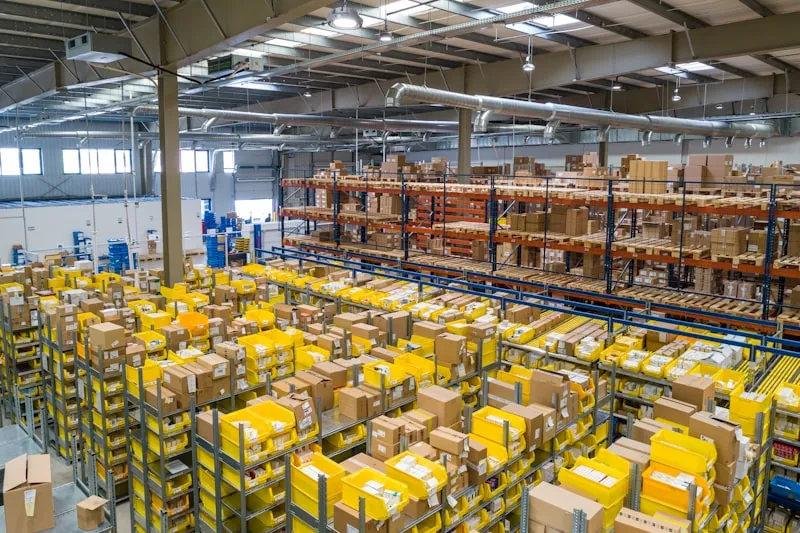
This is significantly faster than processing one order at a time inside WooCommerce. A store doing 30 orders a day can batch-print all their labels in under 10 minutes with ShipStation. Doing the same thing manually through WooCommerce would take an hour or more.
Reducing Cart Abandonment From Shipping Costs
The Baymard Institute puts average cart abandonment at 70%. The number-one reason after "just browsing"? Extra costs like shipping shown too late in checkout.
Here's what actually works to fix this:
Show shipping estimates early. Use a plugin that displays estimated shipping on the product page or cart page, not just at checkout. The WooCommerce Shipping Calculator widget helps here.
Offer a free shipping threshold. If your average order value is $40, set free shipping at $55. About 30-40% of customers will add items to hit the threshold. That's higher AOV and happier customers.
Give options. Show both a free/cheap slow option and a faster paid option. Let people choose.
Be transparent. If shipping costs $12, show that upfront. Surprising customers with costs at the last step is the fastest way to lose a sale.
The Setup I Recommend for Most WooCommerce Stores
If you're shipping under 20 orders per day and primarily domestic:
- Install WooCommerce Shipping for USPS labels (free)
- Set up 3-4 shipping zones (local, domestic, Canada, international)
- Create shipping classes for product types with different shipping profiles
- Enter accurate weights and dimensions for every product
- Set a free shipping threshold at 20-30% above your current AOV
If you're shipping 20+ orders per day or selling on multiple channels:
- Connect ShipStation or Shippo for multi-carrier rate shopping and batch printing
- Use table rate shipping if your product catalog is complex
- Add Easyship if international is more than 10% of your orders
- Set up automation rules to auto-select carriers based on weight, destination, and service level
Need help choosing between carriers? Our USPS vs UPS vs FedEx vs DHL comparison breaks down pricing for common package types. Also see our shipping label printing guide for setting up an efficient packing station.
WooCommerce shipping isn't plug-and-play, but once you configure it properly, it's as powerful as any dedicated e-commerce platform. The key is spending that initial hour or two on setup instead of just enabling flat rate and hoping for the best.