
Your Package Is Your First Impression
Think about the last time you ordered something online. The product listing, the checkout process, the confirmation email — all digital. The package on your doorstep is the first real, physical moment of your brand. Customers form opinions in seconds: does this feel cheap? Did they care? Is this worth what I paid?
A survey by Dotcom Distribution found that 40% of online shoppers say branded or gift-like packaging makes them more likely to recommend a product to friends. And 52% of consumers said they'd return to a business for another purchase if they received premium packaging. This isn't about vanity — it's about repeat purchase rates and word-of-mouth growth.
But here's the flip side: over-packaging is expensive and wasteful. A small jewelry brand doesn't need a box the size of a shoebox with eight layers of tissue paper. Customers notice that too, and not in a good way.
The goal is finding the balance between protection, brand experience, and cost.
The Dimensional Weight Problem
Before you think about branding, you need to understand dimensional weight (DIM weight) pricing. Every major carrier — UPS, FedEx, USPS Priority Mail — charges based on whichever is greater: the actual weight or the dimensional weight. (For a full comparison of carrier pricing, see our USPS vs UPS vs FedEx vs DHL guide.)
The formula: Length x Width x Height / DIM factor (139 for UPS and FedEx domestically)
If you ship a 2-pound item in a 16x12x10 box, the dimensional weight is (16 x 12 x 10) / 139 = 13.8 pounds. You're paying to ship 14 pounds instead of 2. That mistake can easily cost you $5-10 extra per package.
This is why right-sizing your boxes is the single most impactful thing you can do for your shipping costs. Forget custom branded boxes for now — just use the right size box and you'll save thousands per year.
Right-Sizing: The Boxes You Actually Need
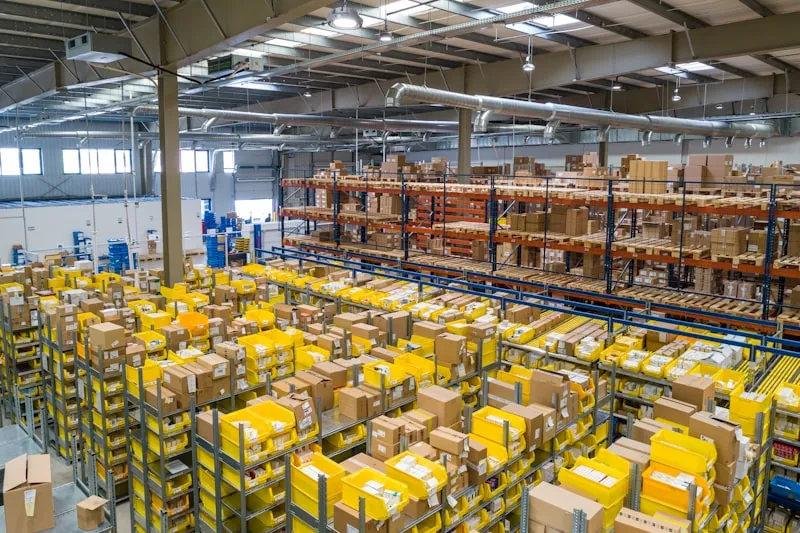
Most small to mid-size e-commerce businesses can cover 90% of their orders with 3-5 box sizes. Here's a solid starting lineup:
- Small: 8x6x4" — perfect for small items, cosmetics, small electronics
- Medium: 12x10x6" — books, multiple small items, clothing folded flat
- Large: 16x12x8" — shoes, larger electronics, multi-item orders
- Long/flat: 14x10x4" — apparel laid flat, posters in tubes
- Extra large: 20x16x10" — bulky items, large multi-item orders
Track which box size you use most frequently. If 60% of your orders go in medium boxes, negotiate bulk pricing on that size first.
Packaging Materials: Boxes vs. Poly Mailers vs. Padded Mailers
Corrugated boxes ($0.50-3.00 each depending on size) are the default for fragile items and anything that needs structure. Single-wall corrugated is fine for items under 20 pounds. Double-wall for heavy stuff.
Poly mailers ($0.10-0.30 each) are lightweight plastic envelopes. They're dirt cheap, weigh almost nothing (reducing shipping costs), and work great for soft goods like clothing, accessories, and non-fragile items. The downside: they look cheap and offer zero crush protection.
Padded mailers ($0.20-0.60 each) split the difference. Bubble-lined mailers protect small fragile items without the bulk of a box. Good for jewelry, small electronics, cosmetics, and books.
Rigid mailers ($0.50-1.50 each) are the move for flat, fragile items like photos, certificates, vinyl records, and art prints. They prevent bending without needing a full box.
Rule of thumb: if the item can survive being tossed around by a carrier (and it will be tossed around), use the lightest and smallest option. If it's fragile or valuable, use a box with proper void fill.
Branded Packaging on a Budget
Custom-printed boxes are expensive. A minimum run of 500 custom boxes starts around $2-5 per box, compared to $0.50-1.50 for plain kraft. That's a significant jump, especially if you ship fewer than 1,000 orders per month.
But you can create a branded experience without custom boxes:
Custom packing tape ($100-200 for a 36-roll run) is the cheapest way to brand a plain box. Every package gets taped shut — might as well make it your brand.
Stickers and labels ($50-150 for 1,000 units) placed on the outside or inside of the box. A 2" round logo sticker sealing the tissue paper adds a nice touch for pennies.
Branded tissue paper ($0.05-0.15 per sheet) wrapping the product inside a plain box creates that "opening a gift" feeling. It's especially effective for apparel and beauty products.
Thank you cards or inserts ($0.03-0.10 per card when printed in bulk) are underrated. A card that says "Thanks for your order! Follow us @brand for 10% off your next purchase" drives social media follows and repeat purchases. Some sellers include a handwritten note for high-value orders — time-consuming, but the review conversion is remarkable.
Branded crinkle paper or tissue as void fill instead of generic packing peanuts. Same protection, but it looks intentional rather than lazy.
The total cost for stickers + branded tissue + a thank you card? About $0.20-0.30 per order. That's a reasonable investment for a noticeably better customer experience.
Sustainable Packaging: What Customers Actually Care About
Sustainability in packaging has moved from "nice to have" to "expected" for many customer demographics, especially the 25-40 age group.
Practical sustainable options:
- Recycled corrugated boxes cost roughly the same as virgin material and are available from every major supplier
- Paper void fill (crumpled kraft paper, honeycomb wrap) replaces bubble wrap at a similar price point
- Compostable poly mailers from brands like noissue cost about 2x traditional poly mailers — worth it if your brand positioning is eco-conscious
- Right-sizing is itself a sustainability win — less material, less wasted space on trucks, lower carbon footprint
What customers don't care about (despite what marketing trends suggest): lengthy paragraphs printed inside the box about your sustainability mission. They care about seeing paper instead of plastic and not receiving a massive box for a tiny product. Show, don't tell.
Void Fill: Protecting Products Without Wasting Money
The purpose of void fill is to prevent items from moving around inside the box. Movement causes damage. The best void fill immobilizes the product.
Crumpled kraft paper ($0.02-0.05 per package) is the all-around winner. Cheap, recyclable, looks decent, provides adequate cushioning for most items. Buy it on a roll and crumple by hand, or invest in a paper-dispensing machine ($200-500) if you ship 50+ packages daily.
Air pillows ($0.01-0.03 per pillow) are the lightest option. They add no meaningful weight to the package, which saves on shipping. You need an air pillow machine ($150-300), but the per-unit cost is unbeatable for high-volume shippers.
Bubble wrap ($0.05-0.15 per foot) is still the best choice for genuinely fragile items. Wrap the product itself, then fill voids with paper or air pillows. Don't use bubble wrap as void fill — it's too expensive for that.
Packing peanuts — avoid them. Customers hate them. They're messy, hard to clean up, and make your brand look dated. Even the biodegradable starch versions are annoying.
Where to Buy Packaging Supplies in Bulk
Buying retail packaging from your local office supply store will drain your margins fast. Here's where volume sellers buy:
Uline is the 800-pound gorilla. Massive selection, fast shipping, excellent quality. Their prices are competitive at volume, though their minimum orders can be high for small businesses. Great for boxes, mailers, tape, and void fill.
EcoEnclose specializes in sustainable packaging. Everything from recycled boxes to compostable mailers to paper tape. Prices are slightly higher than conventional options, but the quality is solid and the environmental credentials are real.
noissue is the go-to for custom-printed sustainable packaging. Custom tissue paper, compostable mailers, and branded tape. Minimum orders start around 250-500 units, which is accessible for smaller brands.
Amazon Business and Walmart Marketplace work for one-off supplies, but the per-unit costs are typically higher than going direct to a packaging supplier.
Local packaging distributors are worth checking, especially for boxes. You save on shipping costs (boxes are expensive to ship because of DIM weight), and you can sometimes negotiate pricing that beats the nationals.
Calculating Your Packaging Cost Per Order
Here's a quick formula to track your actual packaging cost:
(Monthly materials cost + labor time for packing x hourly rate) / Total orders shipped = Cost per order
For a typical small e-commerce business shipping in plain boxes with branded tissue and a thank you card:
- Box: $1.00
- Tissue paper: $0.10
- Thank you card: $0.05
- Branded sticker: $0.05
- Void fill (kraft paper): $0.04
- Tape: $0.03
- Total materials: $1.27 per order
Labor is the wild card. If packing takes 2 minutes per order at $18/hour, that's $0.60 per order in labor. Total cost: roughly $1.87 per package.
For a complete guide to printing shipping labels efficiently, check our label printing setup guide. And to make sure you're getting the best carrier rates for those packages, see our USPS vs UPS vs FedEx vs DHL comparison.
Track this number monthly. If it creeps above $2.50 for standard-size orders, something is off — you're probably over-packaging, using oversized boxes, or your materials costs have drifted up without you noticing.